Mission Statement

In classical sacrifices, the people get the good bits, and the gods get the refuse, the bits that would get thrown out otherwise.

Not our God. Leviticus (particularly Leviticus 3) describes the sacrifices that our LORD demanded from His people of Israel. God gets the kidneys, the tail, and all the fat. He gets the prime steak, He gets the best.

Today we do not literally give sacrifices of animals. For us the ultimate sacrifice has been made through our Lord, Christ Jesus. But should always be our ambition to do the same thing - to offer God the best of what we have, to offer Him the fat, and not the smoke and bones.

Monday, 15 April 2013

Day Fifteen Part Three: Wednesday 27.06.2012


We got back much later than we were expecting to – after 3. Ingrid was waiting at Bushikori for us, (Joash was waiting at home). I ate a late lunch (Ingrid didn’t want, even though there were things other than posho and beans) and then the van was filled again and we set off. We dropped people off in Mbale city, then took Esther home and then we went to Ingrid’s house.
Ingrid and Joash’s father is a pastor, his wife a pastor’s wife. They have 4 children, Ingrid being the eldest (14), Joash next (13), Jershua next (9) and Charity the youngest (3 ½). They live in the town rather than a village, in a garage. It is cemented and has electricity, but there is not much space, especially for the children. They have a lot of challenges, especially with the price of different goods, but their biggest challenge is their accommodation. The neighbours aren’t child friendly, and they want to move, but they can’t afford anything better.


Their family is so strong all the same with the love of God. I was so blessed to be able to visit them – and next time I come I will visit their church (by special invitation!). They are working hard to make a better life for their children. Again, I’m really pleased at the home-life. Their only problem is poverty, not any of the cultural problems (unwed teenaged mothers, alcohol, lack of hygiene, etc) that so often go with it.

After dinner (back at the house) we had a special prayer session for the people affected by the landslides. Please pray for them also. Their future is bleak, especially in the long term.

Sunday, 14 April 2013

Day Fifteen Part Two: Wednesday 27.06.2012

We went into the hospital to visit and pray for some of the people injured. All of the injuries were minor, save for one expectant mother who has probably lost her baby. (All photos were taken with the permission of both the ward nurse and people in the photos. One husband requested that I send a copy of the photo to them.)


After that we went up to the site of the landslides. The ground was spongy, like rubber. There were masses of children around – the schools all let out early so the children could see the site. The rescue efforts were family and police digging with hoes at the spot where they think the last house was.
It then began to rain, the kind of tropical downpour you get in Uganda. We were hurried back to the van, in spite of my protest that we have rain in Australia too. Everyone scurried under cover except for a few children who stayed crouched on the ground, looking at the site of the landslide.
The journey back was worse than the journey there because of the rain. Esther was worried we were going to go off the edge – Anne too. Esther got everyone to sing praise songs. I went to sleep.

Saturday, 13 April 2013

Day Fifteen Part One: Wednesday 27.06.2012

I went to the school and went to P3, one of the classes I hadn’t been to yet. About halfway through the class, Richard came to get me. I was to have some tea and some “bites” and then we were going to the landslides – today rather than tomorrow. We ate, then everyone piled into the van and we set off to Bududa.
It was an extremely bumpy and difficult road. Ignatius said he thought we didn’t have roads like this. We told him there were some that were even worse – where when it rains, you abandon your car because it isn’t going anywhere. He was surprised.
It took longer than we expected to get to the area, due to the increased traffic to the region, and the conditions of the roads. When we got there, it was pretty bad.
18-20 houses were buried – each with an estimated 2 people, mostly women and small children, as the slide happened around 2PM, when the men are at market and the older children are at school. So there are around 40 casualties, although the exact number is not in. Many other houses have been damaged, destroyed, or are at risk of future landslides, so the biggest problem now is homelessness. They can’t set up a camp in the region as there has been a cholera epidemic that is just slowing down, and a camp would see a massive resurgence in that. In the mean time, the people affected have to fend for themselves as best they can – including many new orphans and distraught family members.


This is the 4th slide in the area in recent years. The first slide killed over 450 people, the last to this 96. They are caused mostly by erosion due to deforestation of the area. Another 500 homes are deemed to be at immediate risk.
Later that day we watched a bit of the news, and one of the government ministers was advising that the government wait and let the people resettle themselves in other regions (most people in the area will need to move)… i.e. do nothing. Apparently, those who have lost everything, including family members and friends, have the finances to resettle themselves.

Friday, 12 April 2013

Day Fourteen Part Two: Tuesday 26.06.2012

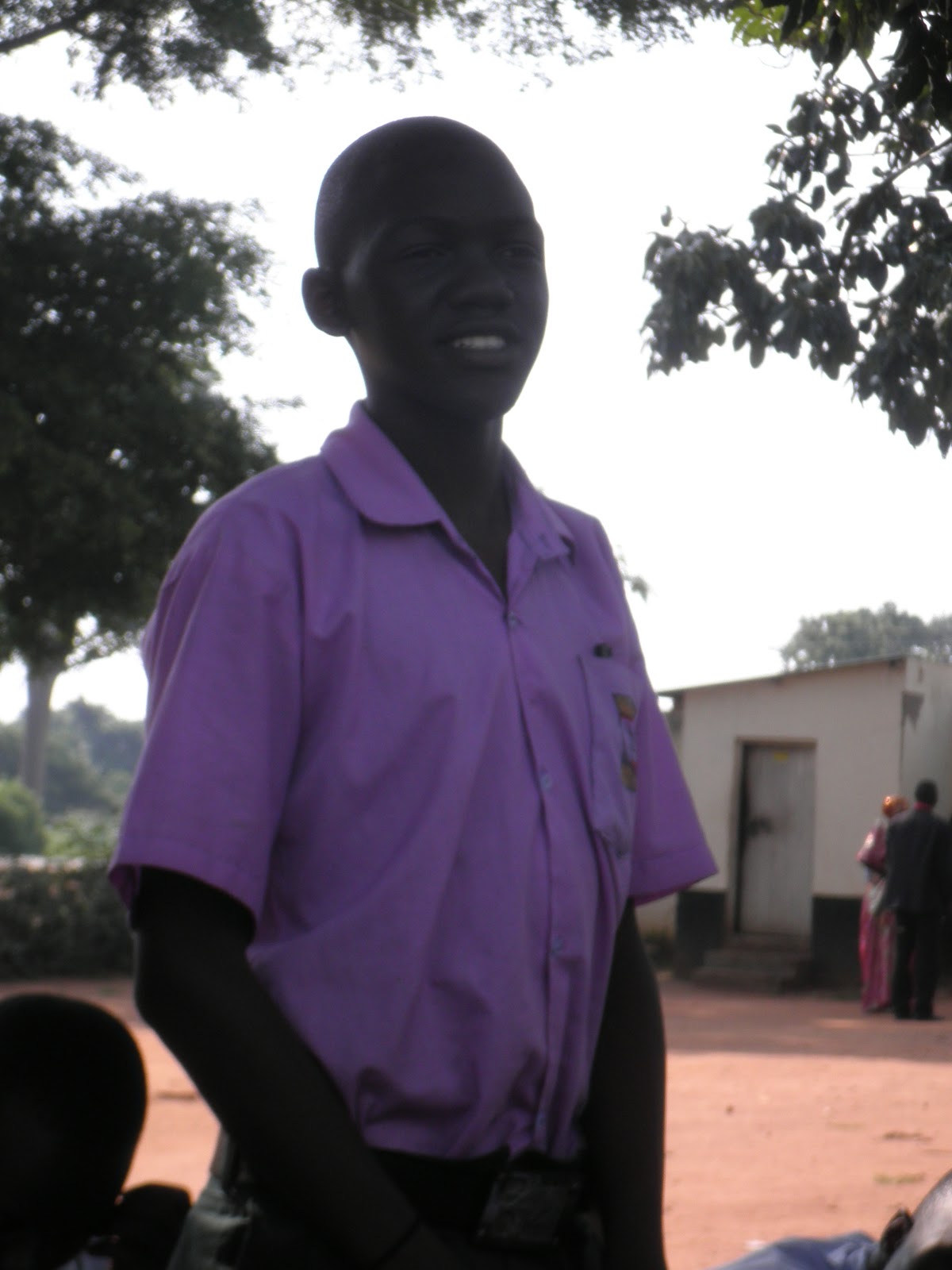
Dan organised for all of the Bushikori children to come out to talk with us. It was good to see Joash and Ingrid. Ingrid is so quiet and shy (how did I get two quiet girls?) and Joash is a student counsellor. Ingrid wants to be a nurse and Joash wants to be a lawyer. I saw their classrooms (so MANY children!) and Ingrid’s bedroom (20 beds with 3 bunks each = 60 girls!). I was amazed at just how many children were at the school. It must be hard having that many people around all the time.


Before we left I gave the headmaster all the soccer shirts and the ball and pump. He looked as thrilled as I imagined the children would be. They are all massive soccer fans here.
At home we watched the news and saw all about the landslides in the region. Thursday we plan to go and see the area and offer help and prayer. There is a lot of devastation in the area, which has had 3 landslides in recent years.

Thursday, 11 April 2013

Day Fourteen Part One: Tuesday 26.06.2012

Another massive day! Today we went to see the homes of Wycliffe and Shamim, and then went to the Lightwayschool to see our ‘big kids’.
We started off with Wycliffe and Shamimu at the centre, and we all had tea and some g-nuts. I made the children some very sweet chai (they could use a few calories, even empty ones) and we asked them a few questions. Being young, their English is not so good, so they often just answer “yes”.


Soon we all got in the van, and drove off to Wycliffe’s house. It was quite a way, and I asked if Shamim’s house was as far. “Further,” was the answer.
Wycliffe lives with his mother, Zerahida, with 5 of his 6 siblings (the oldest girl ran away) and two cousins. The mother is HIV positive, but Wycliff, the youngest, is negative. The remaining children are all in school (aside from the two girl cousins, who are both too young).


The house is quite small, especially for so many people – about the size of my bedroom, which most people think is small. They don’t sleep inside, but outside. All of them share one old blanket, and try to get the biggest share. They have chickens and try to raise a crop of maize and beans to provide some cash.
Next we went to Shamim’s. Esther, who does a lot of road cycling, estimates that it is 15-20km away from Bushikori – so she walks that distance twice a day. (I later found out that with shortcuts across people’s farms it ends up being about 12kms each way.)
Shamim lives with her Jaja (grandmother) and 8 cousins. Jaja is the only adult. They have 2 small houses and they all sleep in one of them. Shamim’s parents are both deceased, most likely of HIV/AIDS. They both had all the symptoms, but weren’t tested, so it can’t be certain. They are doing all right, except when the harvest is nearly but not quite ready. Jaja has several chickens, two goats and a cow. She trades her way up as she can. The animals are mostly kept in enclosures off the ground so that they stay clean. They had beans drying from the roof of the house and on the ground.


I was actually quite pleased with Shamim’s house. It’s very poor conditions, absolutely, but her Jaja is working hard to make a better life for all of her grandchildren. Their isn’t despair or lethargy, but a determination that the future will be better than the past.
Jaja was so thankful for all that I have done. School fees here are not cheap – sponsorship is $320 a year, which is a lot when you only make a few dollars a day. Multiply by each child. I was just happy to see that my sponsorship makes a difference.


Next stop was the lady who was burnt. She has been locked out of her brother’s house and is also pregnant. It is an extremely tough case. Her children are all young, mostly below school age, and their conditions are very bad. Thankfully, being children, they are happy in spite of all the difficult circumstances they are in.


We headed back to Bushikori for lunch, then went back out, this time to Lightway School to see our ‘big kids’.